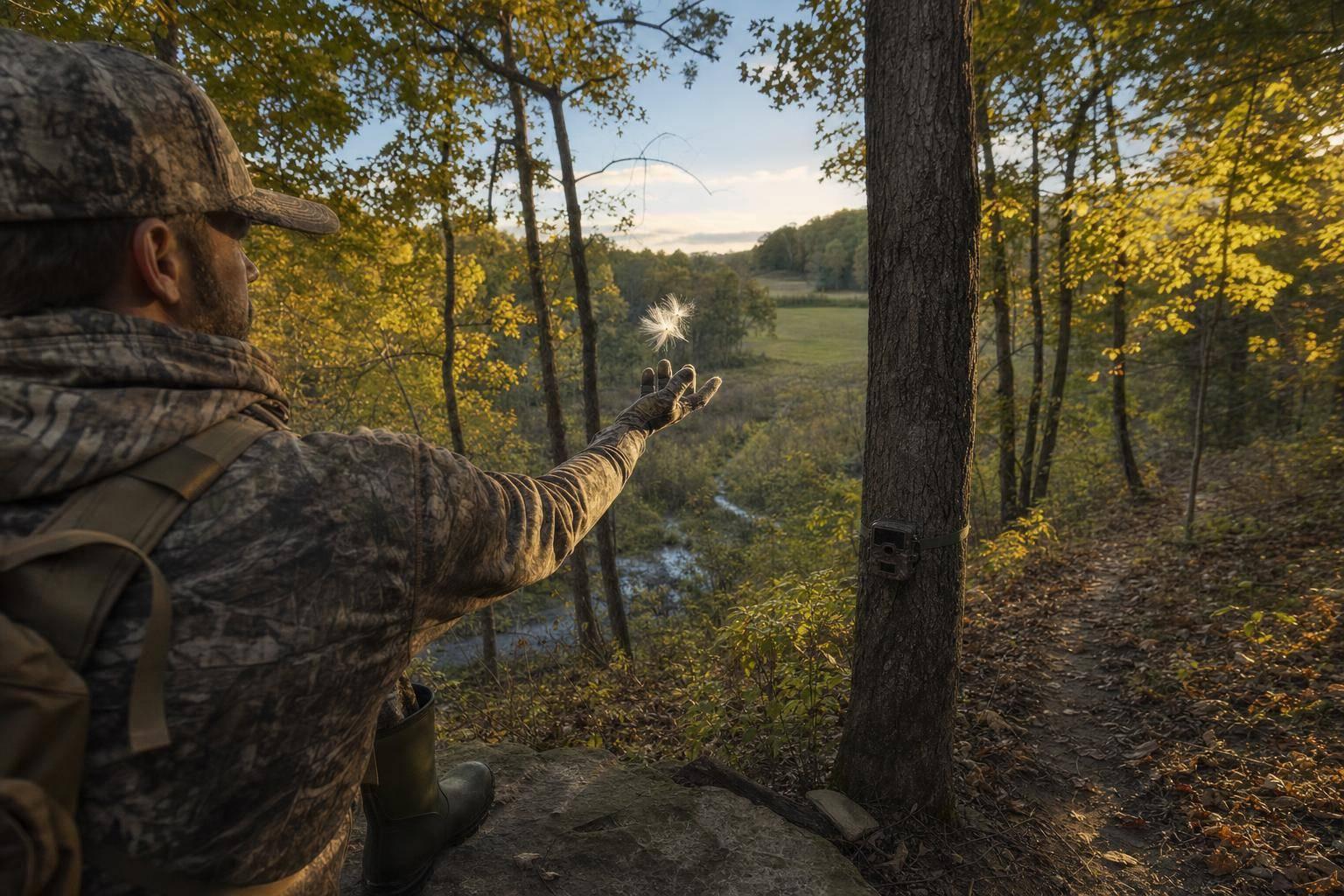
If deer smell you before season, your scouting can cost you shots later. In Kentucky, ultimate whitetail hunts are shaped by wind, thermals, hills, creek bottoms, and open farm ground can push human odor far off your line of travel. My main takeaway is simple: I try to cut scent before I leave home, use low-impact access, and limit trips into high-use deer areas.
Here’s the short version:
- I keep body odor down before the trip with unscented soap, deodorant, clean clothes, and a low-sweat walk in.
- I match access to terrain by using creek beds, ditches, field edges, and ridge backs when the wind helps me.
- I watch thermals because morning air often drops and midday to afternoon air often shifts uphill.
- I treat camera checks like pressure events and stretch visits to 2 to 4 weeks on standard cameras when I can.
- I use rubber boots, gloves, and sealed gear storage to cut odor left on trails, straps, and camera setups.
- I avoid burning out bedding areas since one bad entry can push a mature buck into after-dark movement.
A few points stand out from the article:
- In Kentucky hill country, swirling winds can move scent in ways a map will not show.
- In open crop country, odor can drift a long way across a field edge.
- In many cases, cell cameras cut the most scouting pressure because they remove card-pull trips.
- Parking about 1/4 mile away from the camera area can help keep deer from linking vehicle noise to that spot.
- A scouting window of 10:00 a.m. to 2:00 p.m. is often a safer time to slip in because deer are more likely to be bedded.
Scent Control From Start to Finish for Deer Hunting
sbb-itb-e01ab49
Quick Comparison
| Area | Main scent issue | What I do |
|---|---|---|
| Eastern hills and hollows | Swirling wind, falling and rising thermals | Time entry and exit around air movement |
| River bottoms and thick cover | Scent pooling in low spots | Use creek or edge access with care |
| Open farm country | Odor drifting long distance | Stay strict on wind and route choice |
| Camera sites near bedding | Repeated human visits | Run cell cams or check less often |
This guide comes down to discipline, not magic. If I keep trips short, sweat low, routes clean, and camera pressure light, I give myself a better shot at seeing daylight deer when it counts. For those ready to put these tactics to work on a managed property, you can book your next deer hunting trip with professional guides.
Kentucky Conditions That Shape Scent Control
Kentucky has several deer habitats, and each one deals with scent in its own way. The goal is simple: match your scent-control plan to the wind, cover, and access in that part of the state.
Habitat, Wind, and Thermals by Region
In eastern hill country, steep ridges and hollows can make air currents bounce around. That means entry and exit timing matters a lot. Plan those moves around thermal shifts so you don’t pull scent into bedding cover.
In river bottoms and thick cover, creek-bed or field-edge access can help keep your scent out of bedding cover.
In open crop country, scent tends to travel farther along field edges. That’s where wind discipline matters most.
At places like Peabody WMA in western Kentucky, open grass and timber edges sit right next to each other. Your scent may drift across the grassland or hang up along the timber edges based on wind and time of day.
Scouting Access, Timing, and Kentucky Regulations
Access choices affect scent control just as much as the terrain does. Much of the best agricultural ground in central and western Kentucky is private or leased. Knock on doors in August or September to lock down permission before the season opens. If you wait until October, scouting often turns into a rushed scramble, and that usually means more disturbance.
Kentucky also has large public tracts, including national forest, WMAs, and Corps land around reservoirs. Use ditches, creek beds, and the backside of ridges to hide movement and help limit scent spread. It also helps to park well away from high-activity spots so you can glass from the vehicle first. Before you walk in, confirm property lines with digital mapping tools.
If you’re scouting near open seasons, pay attention to hunter orange rules and seasonal safety rules on public lands. Also check whether the area sits inside a CWD surveillance zone. Kentucky has confirmed Chronic Wasting Disease, and those zones come with mandatory carcass movement limits. In most cases, only boned-out meat and cleaned skulls are allowed for transport.
Once access is set, scent control starts with your pre-trip routine.
Building a Pre-Scouting Scent Control Routine
With access and wind already mapped out, the next move is cutting odor before you even leave the truck. This isn’t something you piece together at the trailhead. It starts the night before and carries all the way through until you’re in the woods.
Body Hygiene and Sweat Control Before You Leave
Kentucky heat, humidity, and steep walks can turn sweat into your biggest scent problem long before you get near a deer trail. You can’t erase human scent, but you can keep it from piling up on the way in.
Start with a shower using scent-free soap and shampoo. Pay extra attention to your head, mouth, and the spots that sweat the most. Before you leave, put on scent-free deodorant and brush your teeth with baking soda or scent-free toothpaste. It also helps to skip garlic, onions, and heavy spices the night before and the morning of your trip.
When you drive, wear only a moisture-wicking base layer. Merino wool can help slow odor buildup. Then get dressed outside the vehicle at the access point, and keep your walk-in slow so you don’t sweat any more than you have to.
Once your body is clean, carry that same discipline into your clothes and gear.
Clothing, Boot, and Gear Prep
Wash all scouting clothes in scent-free detergent with cold water. Air-dry them outside, then seal them in clean storage. Keep gear in clean, sealed containers and away from household and garage smells.
For boots, rubber is the right call. Rubber is non-porous, so it contains foot odor better than leather or nylon. Clean both the soles and uppers before each trip, then spray them with an odor-eliminating spray before you step out of the vehicle. Wear gloves when you handle cameras, straps, and sticks so you don’t leave skin oils behind. And keep scouting gear separate from daily-use items, so it doesn’t pick up fuel, food, or garage odor.
Pre-Trip Scent Control Checklists
| Phase | Action |
|---|---|
| Night Before | Wash scouting clothes in cold water; air-dry outside; seal in airtight bins or bags |
| Morning Hygiene | Shower with unscented soap; use unscented deodorant; brush teeth with baking soda |
| Diet | Skip garlic, onions, and strong spices the night before and morning of |
| Travel | Drive in base layers only; avoid gas stations and fast-food stops |
| Arrival | Dress outside the vehicle; stand on a clean rubber mat |
| Gear | Spray boots, pack, and camera gear with odor-eliminating spray before entering the woods |
| Field | Carry unscented wipes to clean off sweat after steep terrain |
With your scent routine set, the next step is keeping that same discipline on the walk-in and at the camera.
Low-Impact Scouting and Trail Camera Tactics
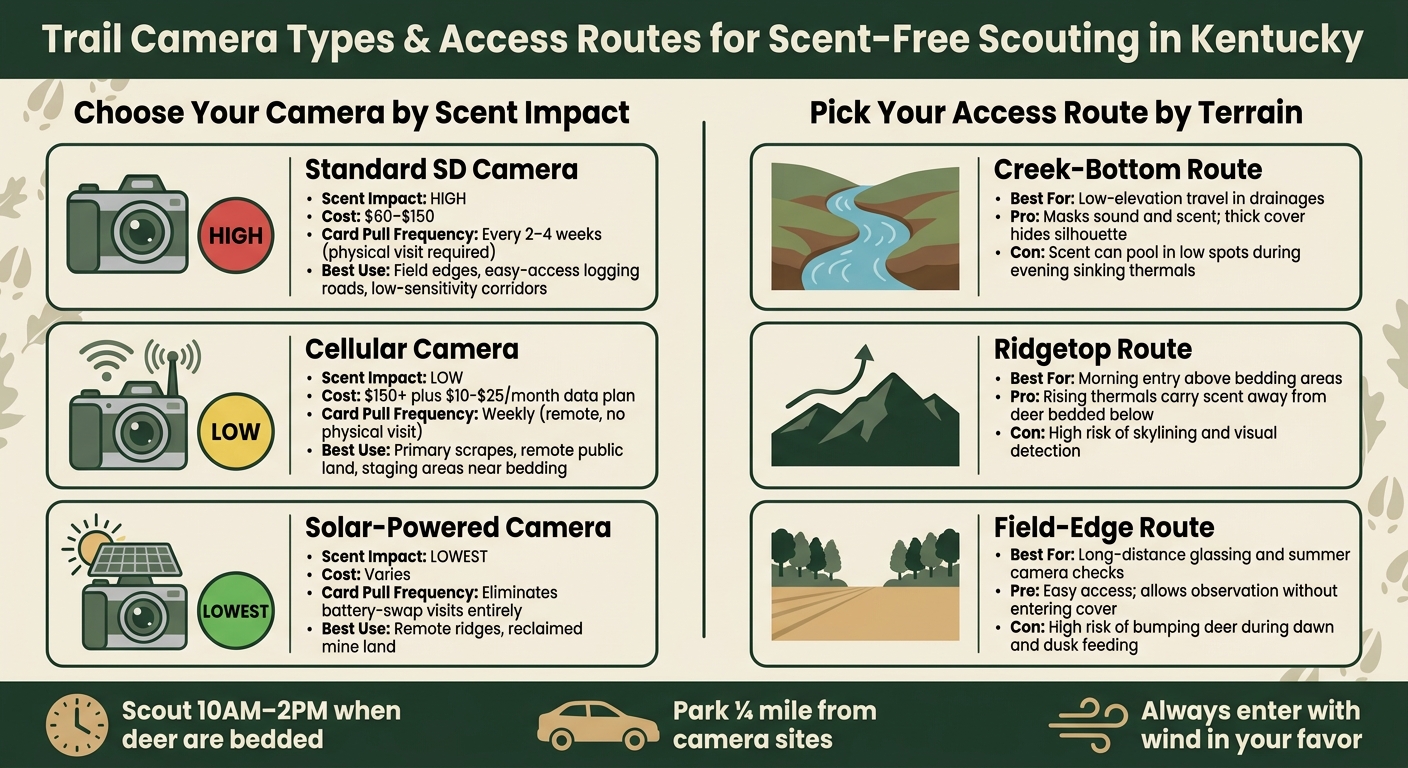
Trail Camera Types & Access Routes for Scent-Free Deer Scouting in Kentucky
With your scent routine dialed in, the next step is moving through the woods without laying down a fresh scent trail. The goal is simple: get in, read the sign, set your cameras, and get out.
Wind-Safe Access Routes and Ground Scouting Discipline
Before you take a single step into the woods, map your route on OnX, HuntStand, or Basemap. Figure out bedding areas, food sources, and funnels from your truck instead of walking in blind. Then build an access route that uses the terrain to keep your scent off deer travel lines.
Creek beds, ditches, and the backside of ridges usually give you the cleanest path. Use morning thermals for low, downhill access, and only use afternoon lift when it carries scent away. Move parallel to main deer trails, not across them, and use side cover so you don’t leave ground scent where deer already travel. In river-bottom systems like those along the Green or Cumberland rivers, cane thickets and cutover timber can help hide your approach.
Scout from 10:00 a.m. to 2:00 p.m., when deer are bedded in heavy cover and thermals tend to stay more stable. Take photos of rubs and scrapes from a distance, and don’t touch overhanging licking branches. Drop waypoints in your mapping app instead of hanging flagging tape.
If you bump deer in a bedding area, back out and stay out for a week.
That same route discipline matters at camera sites. Every extra trip leaves pressure behind.
Trail Camera Setups That Cut Down Scent Events
Once your access is quiet, camera placement becomes the main scent-control choice. Trail-camera pressure doesn’t come from the camera itself. It comes from your visits. Every trip to pull a card leaves scent and adds pressure to the area.
Cellular cameras fix a lot of that by sending photos in real time. That lets you watch a primary scrape or staging area for months without making a physical visit. Standard SD cameras still have a place, but keep card pulls to every two to four weeks, and only go in when the wind is right. Wear nitrile gloves any time you handle cameras, straps, or SD cards.
Mount cameras 6 to 7 feet high and angle them downward so they stay above a mature buck’s eye line. Face them north or east to cut glare at dawn and dusk. Good spots include pinch points like saddles and fence gaps, licking branches set 8 to 12 feet away, and water sources, especially during Kentucky’s September heat waves. Park at least a quarter-mile from the camera site so deer don’t start tying your vehicle route to that location.
On remote Kentucky ridges or reclaimed mine land, solar-powered setups cut down battery-swap trips and help keep pressure low.
Comparison Tables: Cameras, Access Routes, and Check Frequency
Use the charts below to match camera type, access route, and check schedule to your pressure level.
| Camera Type | Scent Impact | Cost | Best Use Case |
|---|---|---|---|
| Standard SD | High – physical card pulls every 2–4 weeks | $60–$150 | Field edges, easy-access logging roads, low-sensitivity corridors |
| Cellular | Low – remote data delivery, no physical visits | $150+ plus $10–$25/mo | Primary scrapes, remote public land, staging areas near bedding |
| Solar-Powered | Lowest – eliminates battery-swap visits | Varies | Remote ridges, reclaimed mine land |
| Access Route | Best Use Case | Pros | Cons |
|---|---|---|---|
| Creek-Bottom | Low-elevation travel in drainages | Masks sound and scent; thick cover hides silhouette | Scent can pool in low spots during evening sinking thermals |
| Ridgetop | Morning entry above bedding areas | Rising thermals carry scent away from deer bedded below | High risk of skylining and visual detection |
| Field-Edge | Long-distance glassing and summer camera checks | Easy access; allows observation without entering cover | High risk of bumping deer during dawn and dusk feeding |
| Check Frequency | Intel Value | Pressure Level | Best Scenario |
|---|---|---|---|
| Weekly | Excellent | Extreme | Cellular cameras with remote checks |
| Biweekly | Good | Moderate | High-traffic summer food sources with standard SD cameras |
| Monthly | Fair | Low | Primary scrapes and bedding transitions; keeps core areas cold |
Gear, Guided Hunts, and Key Takeaways
Clothing and Pack Systems for Kentucky Heat and Hills
Once access is dialed in, clothing is usually the next place things go sideways. In Kentucky’s early season, heat can turn sweat into your biggest scent issue before you even get near the stand. A simple fix helps a lot: carry your outer layers in your pack during the walk-in, then put them on only after you’ve settled in.
For base layers, go with moisture-wicking fabrics and lightweight, breathable camouflage that can handle the heat. Odor-absorbing layers can help keep sweat in check on hot climbs. Rubber boots are a solid pick for scent control, and for steep or wet access, you can switch to supportive waterproof boots. On dry approaches, soft-soled rubber models help cut down dry-leaf noise. It also pays to keep boots sealed away from fuel and food odors until you head out.
If a long ridge walk leaves you overheated, scent-free field wipes can remove fresh sweat before it starts to build up. Keep clean gear sealed in odor-free storage.
Applying Scent Discipline on Guided Hunts in Northeastern Kentucky
Guided hunts can cut down on guesswork, but they don’t cut down on scent pressure. In northeastern Kentucky, steep hardwood hollows and ridges make scent control harder. Wind can swirl through deep terrain, so stand selection and access routes still need to match wind direction and thermals.
On Whitetail Hunting Kentucky guided hunts in northeastern Kentucky, scent discipline starts at the lodge and stays with you all the way to the stand. Store gear in airtight totes or scent-control bags, well away from cooking smells. Don’t wear hunting clothes while driving or stopping for fuel. On the walk in, move slowly, and wait to put on heavy layers until you’re settled so you don’t overheat on the climb. On managed ground, low-impact access and scent-aware stand entry help protect mature-buck patterns for the rest of the season.
Conclusion: The Core Rules of Scent-Free Scouting
The core rules are simple:
- Control body odor before you leave home
- Keep hunting clothes sealed away from fuel and household smells
- Use rubber boots
- Move in with the wind
- Limit how often you disturb a good area
Scent control is discipline, not a product.
FAQs
How much does scent control really matter when scouting?
Scent control matters because a whitetail’s nose is its main line of defense. You’re not going to erase your scent 100%, so the aim is simple: cut it down enough that the deer doesn’t react badly.
That starts with the basics. Use scent-free hygiene products, wear rubber boots, and store your gear in sealed containers. Then back that up with smart field tactics, like scouting downwind and planning entry and exit routes that keep your scent away from the areas deer use most.
What is the best access route for Kentucky hill country?
In Kentucky hill country, the best access route uses the lay of the land to keep you out of sight and keep your scent away from bedding and feeding areas. Stick to low-impact paths on the back side of ridges, in ditches, or along creek beds. Changes in elevation can also help carry scent away from deer instead of pushing it right into them.
You also need to think past the walk in. Plan for both wind direction and thermal shifts, then pick an approach that gives you a clean way out too. If your exit route blows scent through your hunting area or nearby bedding cover, you can burn the spot without ever taking a shot.
Are cell cameras worth the cost for low-pressure scouting?
Yes. In Kentucky, cell cameras are often worth the cost for low-pressure scouting. They send images in real time, which means you don’t have to keep walking into the woods to check cards. That matters in spots where deer pick up on pressure fast, like scrapes, staging areas, and pinch points.
There is a trade-off. Most cell cameras come with a monthly data plan, usually $10 to $25, and they rely more on battery life and cell service than standard cameras.
Still, if your goal is to keep mature bucks calm and limit how much human scent you leave behind, cell cameras are a smart tool.